

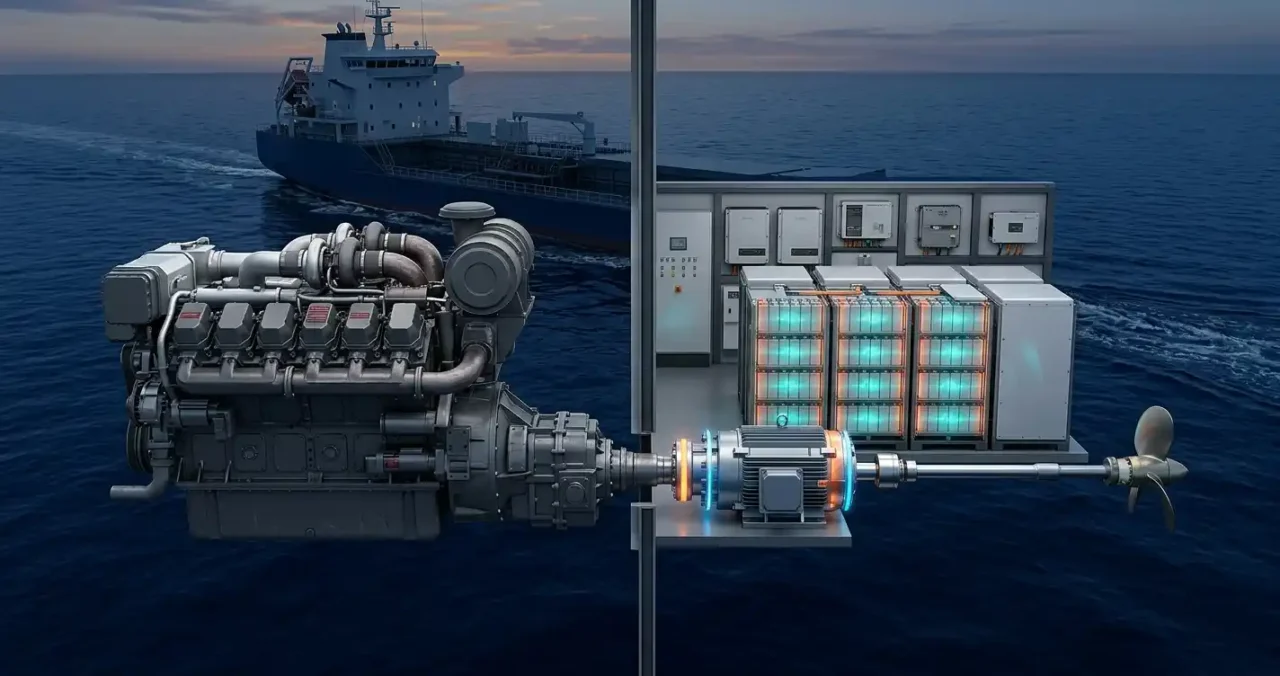
Marine Hybrid Propulsion Systems use both diesel power and electric power to move a vessel. They help cut fuel use, lower emissions, and reduce running costs. As the marine industry looks for cleaner ways to operate, hybrid systems have become a smart choice for many vessel owners.
Fuel prices keep going up. Rules on emissions are also getting stricter. Because of this, many operators are looking for better ways to save fuel and cut waste. Marine hybrid propulsion systems are now used on commercial vessels, ferries, workboats, offshore support vessels, and pleasure craft. These systems integrate diesel-electric propulsion, battery energy storage, and smart energy management. The result is a vessel that uses power more efficiently. In this guide, you will learn how hybrid propulsion works, where it is used, and why it is helping shape the future of sustainable shipping.
What Are Marine Hybrid Propulsion Systems?
In simple terms, marine hybrid propulsion systems use both a diesel engine and an electric motor to power a vessel. This setup helps save fuel, lower emissions, and improve overall efficiency.
Think of it as getting the best of both worlds. A vessel can use diesel power when high power is needed and switch to electric propulsion when running at lower speeds. This gives operators more control over fuel use and operating costs.
Definition and Core Components
A marine hybrid propulsion system combines several technologies into one power system. The main parts include a diesel engine, an electric motor, a battery energy storage system, and an energy management system.
The diesel engine provides reliable power for longer trips. The electric motor offers clean and quiet operation. The battery stores energy for use when needed. The energy management system controls how power is distributed throughout the vessel. It helps ensure each component works together as efficiently as possible.
How Hybrid Marine Propulsion Works
The system can run on diesel power, electric power, or both simultaneously. The choice depends on the vessel’s speed, load, and operating conditions.
For example, a ferry may use electric propulsion while leaving the dock. Once it reaches open water, it can switch to diesel power. This helps reduce fuel consumption and cuts carbon emissions in busy ports and waterways.
Difference Between Conventional and Hybrid Propulsion
Traditional marine propulsion relies mainly on a diesel engine. While reliable, it often uses more fuel and produces more emissions.
Hybrid systems add electric propulsion and battery support. This allows better load management and improved fuel efficiency. As a result, many commercial vessels, workboats, offshore support vessels, and pleasure craft are moving toward hybrid marine propulsion as a smarter long-term solution.
Types of Marine Hybrid Propulsion Systems
Marine hybrid propulsion systems come in several forms. Each type is designed for different vessel needs and operating conditions. The right choice depends on how a vessel is used, how much power it needs, and how often it operates at low or high speeds.
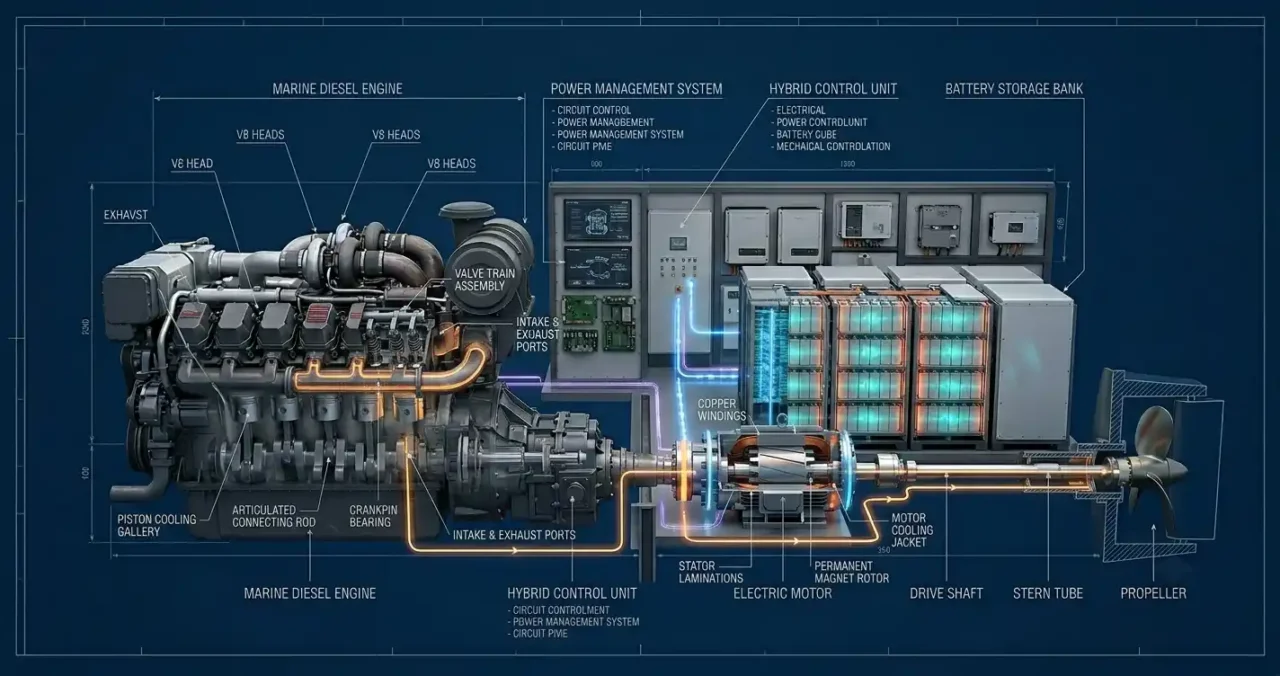
Some systems focus on fuel savings. Others focus on flexibility or lower emissions. Understanding the main types can help vessel owners choose a setup that matches their goals.
Parallel Hybrid Systems
A parallel hybrid system allows the diesel engine and electric motor to drive the propeller together or separately.
This is one of the most common hybrid marine propulsion designs. The vessel can run on electric propulsion at low speeds and switch to diesel power when more speed or power is needed. It can also use both power sources simultaneously.
Parallel systems are often found in workboats, ferries, and pleasure craft. They offer a good balance between performance and fuel efficiency.
Series Hybrid Systems
In a series hybrid system, the diesel engine does not drive the propeller directly.
Instead, the engine produces electricity. That electricity powers the electric motor, which then turns the propeller. A battery energy storage system can also provide power when needed.
This setup gives operators more control over energy use. It is often used in vessels that spend extended periods at steady speeds.
Series-Parallel Hybrid Systems
A series-parallel system combines features from both designs.
The vessel can operate like a series system, a parallel system, or a mix of both. This provides excellent flexibility. Operators can choose the most efficient power source for different conditions.
Because of this flexibility, series-parallel systems are becoming more popular on commercial vessels and offshore support vessels.
Plug-In Hybrid Marine Systems
A plug-in hybrid system includes batteries that can be charged from shore power.
This allows the vessel to travel short distances using electric propulsion alone. The diesel engine is used only when extra range or power is required.
Plug-in systems can help reduce carbon emissions, fuel consumption, and engine running hours. They are becoming a popular option for ferries and vessels that follow fixed routes.
Key Components of a Marine Hybrid Propulsion System
A marine hybrid propulsion system works because several key components function as a single unit. Each component has a specific job. Together, they help improve fuel efficiency, reduce emissions, and deliver reliable power on the water.
Understanding these parts makes it easier to see why hybrid marine propulsion is becoming a popular choice for modern vessels.
Diesel Engine
The diesel engine remains a key part of many marine hybrid propulsion systems.
It provides dependable power for long trips and demanding operations. When a vessel needs extra speed or must travel long distances, the diesel engine can take over most of the workload.
Modern diesel engines are also more efficient than older designs. When paired with electric propulsion, they can operate in ways that reduce fuel consumption and unnecessary engine wear.
Electric Motor
The electric motor helps move the vessel using stored electrical energy.
It is especially useful during low-speed operations. This includes docking, leaving port, and traveling through areas with strict emission rules.
Electric propulsion is quiet and produces no direct exhaust emissions while operating. This can improve onboard comfort and support cleaner marine operations.
Battery Energy Storage System
The battery energy storage system stores electricity for later use.
When power demand is low, excess energy can be saved in the batteries. That energy can then be used when the vessel needs it.
Many modern systems use lithium-ion batteries because they offer high energy density and fast charging capabilities. Batteries also help reduce the load on the diesel engine during daily operations.
Power Management System
The power management system acts as the brain of the entire setup.
It monitors power demand and decides when to use the diesel engine, electric motor, or battery power. This process helps improve load management and fuel efficiency.
Without this system, the vessel would not be able to switch smoothly between power sources.
Propulsion Control Unit
The propulsion control unit manages the delivery of power to the propeller.
It helps ensure smooth operation and reliable performance under different conditions. The system also allows operators to monitor and control propulsion settings from a central location.
Together, these components create a smart and efficient marine propulsion system that supports sustainable shipping and lower operating costs.
Benefits of Marine Hybrid Propulsion Systems
Marine hybrid propulsion systems help vessels use less fuel, produce fewer emissions, and operate more efficiently. That is why more vessel owners are choosing hybrid technology today.
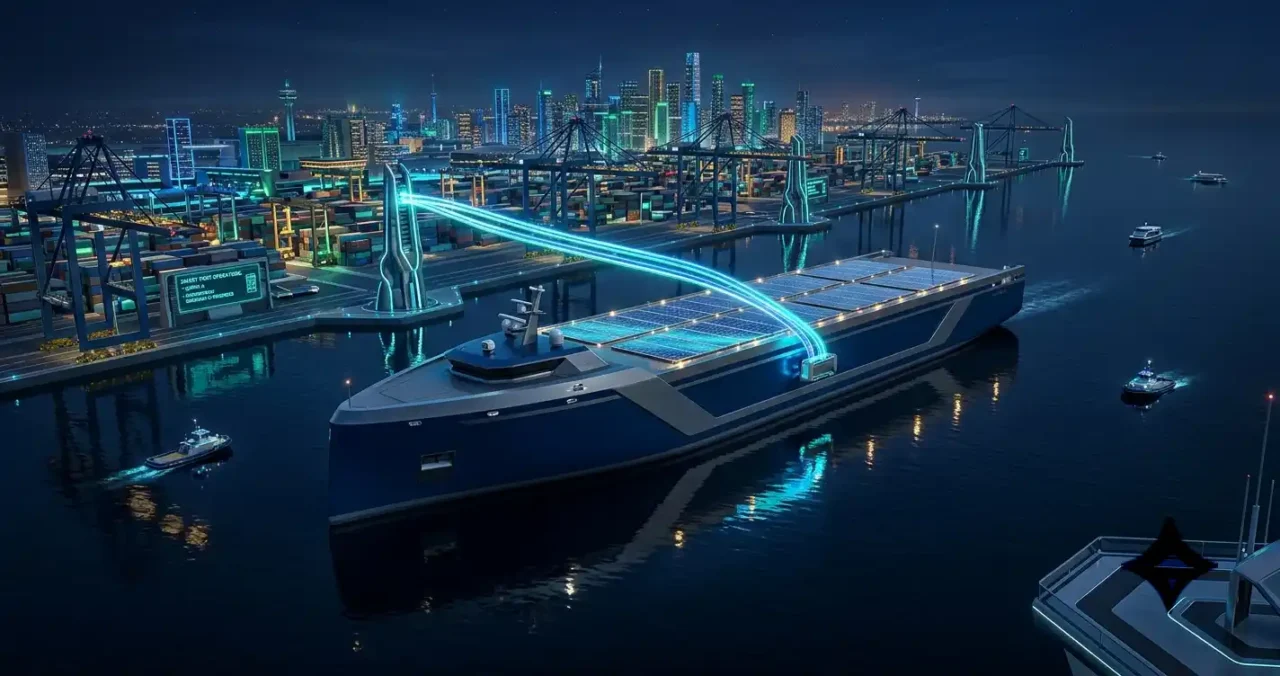
The marine industry is changing. Fuel costs continue to rise, and environmental rules are becoming stricter. Hybrid propulsion gives operators a practical way to improve performance while keeping costs under control.
Improved Fuel Efficiency
One of the biggest benefits of hybrid marine propulsion is better fuel efficiency.
A traditional diesel engine often runs even when full power is not needed. This can waste fuel over time. A hybrid system solves this problem by using electric propulsion during low-demand operations.
The result is lower fuel consumption and better use of available energy. For vessels that operate every day, these savings can add up quickly.
Reduced Emissions and Environmental Impact
Lower emissions are another major advantage.
When a vessel uses battery power or an electric motor, it burns less fuel. This means fewer carbon emissions and less environmental impact.
Many ports and waterways now encourage cleaner vessel operations. Hybrid systems help operators meet these requirements while supporting sustainable shipping goals.
Lower Operating Costs
Fuel is one of the largest expenses in marine operations.
By reducing fuel use, hybrid systems can help lower day-to-day operating costs. They can also reduce maintenance expenses. Because the diesel engine does not run as often, there may be less wear on key engine components.
Over time, these savings can help offset the initial investment.
Quieter Vessel Operation
Electric propulsion systems operate much more quietly than conventional engines.
This creates a more comfortable experience for passengers and crew members. It can also be helpful for ferries, pleasure craft, and vessels working in noise-sensitive areas.
Increased Reliability and Redundancy
Hybrid systems provide more than one power source.
If one power source is unavailable, another can help keep the vessel operating. This added redundancy improves reliability and gives operators greater confidence during daily operations.
For commercial vessels, workboats, and offshore support vessels, that extra layer of security can be extremely valuable.
Hybrid vs Traditional Marine Propulsion Systems
Hybrid propulsion uses both diesel and electric power, giving vessels more flexibility and better energy control. Traditional systems rely mainly on diesel. Both can move a vessel safely, but they differ in fuel use, emissions, maintenance, and long-term cost.
| Hybrid | Traditional | |
| Fuel use | Switches to electric at low speeds. Lower fuel consumption overall. | Diesel runs at all times. Higher fuel use, even at low speeds. |
| Maintenance | Fewer engine hours. Less wear on key components. | More moving parts. Frequent servicing is required. |
| Emissions | Lower emissions. Supports sustainable shipping standards. | Higher carbon output due to constant fuel combustion. |
| Long-term cost | Higher upfront cost. Savings recovered through fuel and maintenance reductions. | Lower initial cost. Fuel and maintenance expenses add up over time. |
Choosing the Right Marine Hybrid Propulsion System
The best marine hybrid propulsion system depends on how a vessel is used. There is no one-size-fits-all solution. Each vessel has different power needs, operating patterns, and performance goals.
Before investing in a hybrid system, it is important to look at several key factors. A careful evaluation can help ensure better efficiency, lower costs, and long-term reliability.
Vessel Type and Operational Profile
The first step is to understand how the vessel operates.
A ferry that follows a fixed route has different needs than an offshore support vessel or a pleasure craft. Some vessels spend long hours at sea. Others make frequent stops and operate at low speeds.
Knowing how the vessel is used helps determine the most suitable hybrid propulsion design.
Power Requirements
Every vessel requires a certain amount of power to perform its tasks.
Heavy-duty commercial vessels often need more power than recreational boats. The propulsion system must be able to handle peak demand while still operating efficiently during normal conditions.
A proper power assessment helps ensure that the diesel engine, electric motor, and battery energy storage system work together effectively.
Budget and Return on Investment
Cost is always an important consideration.
Hybrid systems usually require a larger upfront investment than traditional marine propulsion systems. However, fuel savings and lower maintenance costs can provide long-term value.
Operators should compare the initial cost with the expected savings over the vessel’s life.
Maintenance and Service Support
Reliable service support is essential for any marine propulsion system.
Before choosing a system, it is important to consider the availability of parts, technical support, and maintenance services. A well-supported system can reduce downtime and help keep operations running smoothly.
By evaluating vessel type, power needs, budget, and service support, vessel owners can select a hybrid propulsion solution that delivers strong performance, improved fuel efficiency, and long-term operational benefits.
Frequently Asked Questions
What is a marine hybrid propulsion system?
A marine hybrid propulsion system uses both a diesel engine and an electric motor to power a vessel. The system can switch between power sources or use them together to improve fuel efficiency and reduce emissions.
How much fuel can a hybrid propulsion system save?
Fuel savings depend on vessel type, operating conditions, and system design. Many vessels see meaningful reductions in fuel consumption because the electric propulsion system can handle low-speed operations more efficiently.
Are hybrid propulsion systems suitable for commercial vessels?
Yes. Many commercial vessels use hybrid propulsion to lower fuel costs, reduce carbon emissions, and improve operational efficiency. Ferries, workboats, and offshore support vessels are common examples.
What is the difference between series and parallel hybrid propulsion?
In a series hybrid system, the diesel engine generates electricity that powers the electric motor. In a parallel hybrid system, both the diesel engine and electric motor can drive the propeller directly.
Is hybrid propulsion more expensive than traditional marine engines?
The initial cost is usually higher. However, lower fuel consumption, reduced maintenance needs, and improved efficiency can help offset the investment over time.
Can existing vessels be retrofitted with hybrid propulsion systems?
Yes. Many existing vessels can be upgraded with hybrid propulsion technology. The feasibility depends on the vessel’s design, available space, power requirements, and operating profile.
Thank you for reading!