

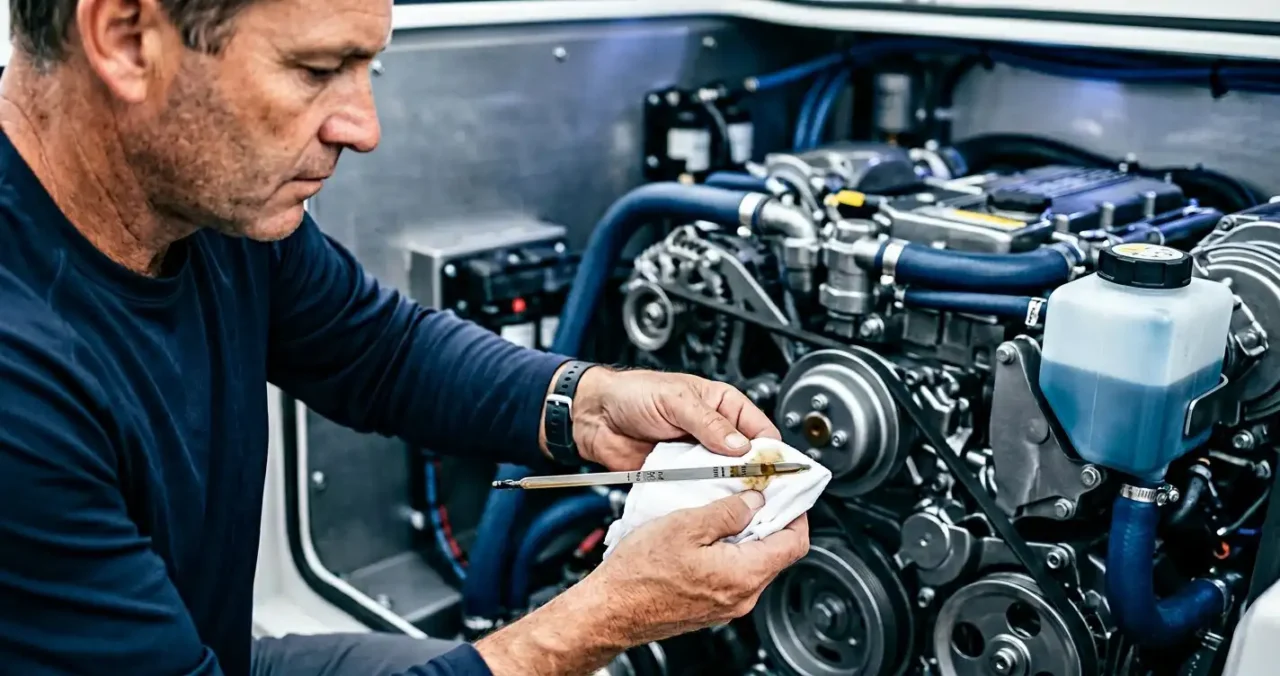
Marine diesel engine maintenance is the difference between a smooth day on the water and a dead engine miles from shore. In short, it means regularly checking your fuel system, cooling system, oil, filters, and belts before small issues turn into costly breakdowns.
Your engine works hard every time you leave the dock. Salt water, vibration, and heat wear down parts like the impeller, zinc anode, and fuel filter faster than most owners realize. Skip a raw water strainer cleaning or ignore a corroded battery terminal, and overheating or fuel contamination can strand you offshore. This guide walks you through simple, proven steps to keep your marine diesel engine running strong, season after season.
What Is Marine Diesel Engine Maintenance and Why It Matters
A marine diesel engine works harder than almost any other engine you own. It runs in salt air, battles constant vibration, and depends on raw water for cooling. That combination wears parts down fast if you ignore it.
Marine diesel engine maintenance means checking, cleaning, and replacing the parts that keep your engine running smoothly. This includes the fuel system, cooling system, filters, belts, and electrical components. Done right, it catches small problems before they turn into expensive repairs or a dead engine offshore.
Skip maintenance, and you’re gambling with your safety. A boat is not a car. You can’t pull over on the highway when something fails. You’re stuck, drifting, or worse.
Common Risks of Neglected Engine Maintenance
Neglect adds up quietly, then hits all at once. Here’s what typically goes wrong:
- Overheating: A clogged raw-water strainer or a worn impeller prevents proper cooling. The engine temperature climbs fast.
- Fuel contamination: Water and debris build up in the fuel tank over time. This clogs injectors and starves the engine of clean fuel.
- Corrosion: Salt water eats away at metal parts. A worn zinc anode means your engine block takes the damage instead.
- Electrical failure: Corroded battery terminals or a weak alternator leave you stranded with no power to start the engine.
- Costly repairs: A five-dollar impeller ignored today can mean a cracked heat exchanger tomorrow. That repair costs hundreds, sometimes thousands.
Most of these failures don’t happen overnight. They build slowly, then show up at the worst possible moment, usually miles from shore.
Benefits of a Proactive Maintenance Routine
A little consistency goes a long way with diesel engines. Here’s what you gain:
- Reliability: Your engine starts when you need it to, every time.
- Longer engine life: Diesel engines can run for thousands of hours if you take care of them. Neglected engines fail years earlier.
- Lower repair costs: Routine parts like filters and impellers cost far less than the systems they protect.
- Better fuel efficiency: A clean fuel system and properly tuned engine burn fuel more efficiently.
- Peace of mind: Knowing your engine is in good shape means you can focus on the water, not worry about what might break.
Think of maintenance as insurance you pay for in time, not money. A few minutes now saves hours of trouble later.
Daily and Pre-Departure Engine Checks
Never leave the dock without checking your engine first. A quick look before departure catches problems early, before they turn into a breakdown at sea.
These checks take five minutes. But they can save your whole trip.
Fluid Levels (Oil, Coolant, Fuel)
Start with the basics. Check your engine oil level. Low oil means poor lubrication, and that wears out parts fast.
Next, check the coolant. Your cooling system needs sufficient fluid to keep engine temperature stable. Low coolant leads to overheating.
Then check your fuel. Look for water or debris in the fuel line. Contaminated fuel clogs injectors and starves your engine of power.
Visual Inspection for Leaks and Corrosion
Walk around the engine. Look closely. Any wet spots? That could be an oil leak or a coolant leak.
Check for corrosion too. Salt air is tough on metal. Rust near the alternator or starter motor is a warning sign. Don’t ignore it.
Belt and Hose Condition Checks
Belts and hoses wear out quietly. Look for cracks, fraying, or looseness in the belt. A worn belt can snap without warning.
Squeeze the hoses gently. They should feel firm, not soft or brittle. A cracked hose can fail mid-trip, and that’s the last thing you want offshore.
Routine Maintenance Schedule (Weekly, Monthly, Annual)
How often should you service a marine diesel engine? Weekly checks, monthly deep cleans, and annual overhauls keep your engine running for years, not just seasons.
Think of it like a rhythm. Small tasks each week. Bigger tasks each month. Major service once a year. Skip the rhythm, and small problems turn into big repairs.
Oil and Filter Change Intervals
Change your engine oil regularly. Most marine diesel engines need an oil change every 100 to 200 hours of use, or once a season, whichever comes first.
Change the oil filter at the same time. A dirty filter lets debris circulate through the engine. That debris scratches parts and shortens engine life.
Don’t wait until the oil looks black and thick. By then, it’s already lost its protective qualities.
Fuel System Cleaning and Water Separator Checks
Your fuel system needs attention too. Check the water separator often. It catches water and debris before they reach the injectors.
Empty it regularly. A full water separator can’t do its job. And once water gets past it, fuel contamination follows fast.
Clean the fuel lines periodically as well. Sediment builds up over time, especially if your fuel sits unused for weeks.
Impeller Replacement Timeline
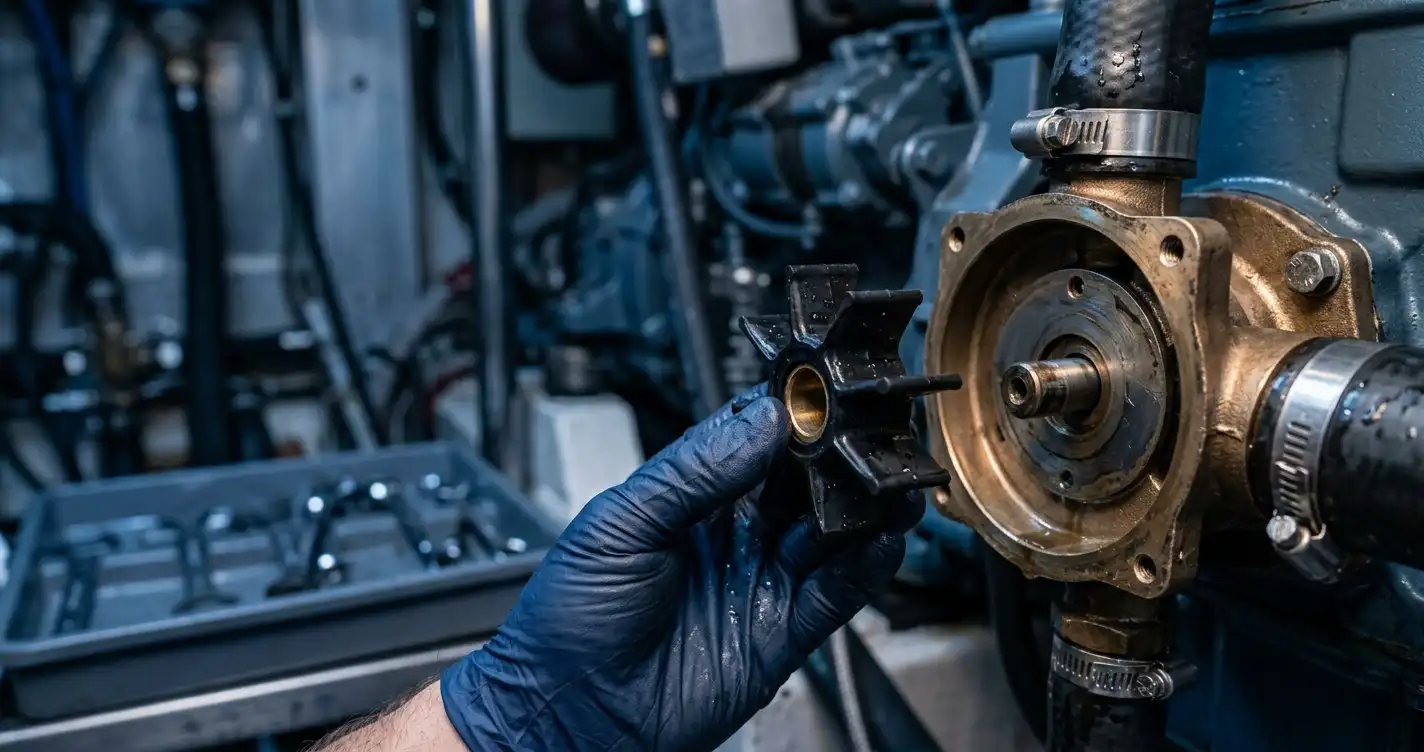
The impeller is small, but it matters a lot. It pumps raw water through your cooling system to keep the engine from overheating.
Replace it every one to two years. Rubber blades wear down with use and heat. A cracked or missing blade means poor cooling, and that leads to expensive damage fast.
Mark your calendar. This one part is easy to forget, but costly to ignore.
Cooling System Maintenance for Marine Diesel Engines
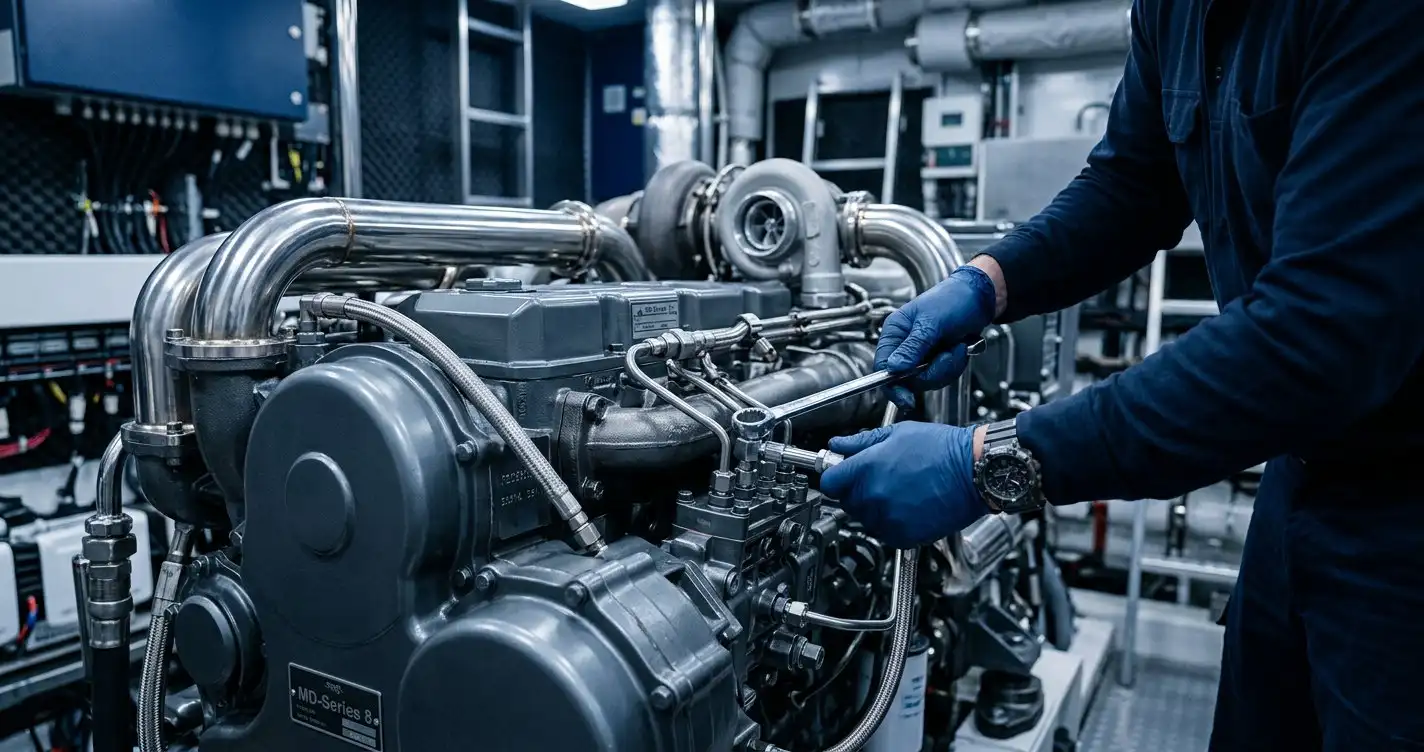
Why does your engine overheat so easily? A dirty raw water strainer or a worn zinc anode blocks proper cooling, which raises engine temperature quickly.
Your cooling system works quietly in the background. Please ignore it, and it will fail right when you need it most.
Raw Water Strainer Cleaning
The raw water strainer catches debris before it enters your cooling system. Seaweed, sand, and small particles all get trapped here.
Check it often, especially after sailing through murky or shallow water. A clogged strainer restricts water flow. Less water flow means less cooling, and that means a hotter engine.
Clean it out every few weeks. It only takes a few minutes, but it protects your entire cooling system from strain.
Heat Exchanger and Zinc Anode Inspection
The heat exchanger works like a radiator for your engine. It transfers heat away using raw water instead of air.
Over time, scale and sediment build up inside it. This reduces its cooling power. Have it inspected and flushed once a year to keep it working properly.
The zinc anode protects your engine from corrosion. It sacrifices itself first, so metal parts like the heat exchanger and engine block stay safe.
Check the zinc anode every few months. If it’s worn down more than half, replace it right away. A depleted anode means corrosion starts attacking your engine instead.
Small parts, big protection. That’s the story of your cooling system.
Common Marine Diesel Engine Problems and Fixes
Why does your engine suddenly overheat, stall, or refuse to start? Most marine diesel engine problems trace back to three things: heat, fuel, and power.
Good news. Most of these problems are easy to spot early. And even easier to fix, if you catch them in time.
Overheating Causes and Solutions
Overheating is one of the most common problems with marine diesel engines. A clogged raw water strainer is often the cause. So is a worn impeller or a scaled-up heat exchanger.
Check your temperature gauge often. If it climbs higher than normal, stop and investigate right away.
The fix is usually simple. Clean the strainer. Replace the impeller. Flush the heat exchanger. These small steps prevent major engine damage.
Fuel Contamination and Air in the Fuel Line
Water or debris in your fuel system can cause rough running, stalling, or complete loss of power. This is fuel contamination, and it’s more common than most owners think.
Air in the fuel line causes similar problems. The engine sputters or won’t start at all.
Check your water separator regularly. Bleed the fuel line if you suspect air has entered. This clears trapped air and restores smooth fuel flow.
Starting Issues and Battery Maintenance
A weak battery is the most common reason a marine diesel engine won’t start. Corroded terminals and loose connections cause the same problem.
Clean your battery terminals often. Check that connections are tight. Test your battery charge before every trip.
A strong battery means a reliable start, every single time.
Winterization and Long-Term Storage Tips
What happens if you skip winterization? Trapped water freezes, cracks engine parts, and turns a simple lay-up into a costly repair come spring.
Winterization protects your engine during months of sitting idle. A little prep now saves major headaches later.
Fogging the Engine and Fuel Stabilization
Fogging protects your engine’s internal parts during storage. It coats the cylinders with a light oil, which prevents rust and corrosion while the engine sits unused.
Run fogging oil through the engine before shutting it down for the season. This simple step keeps internal components protected until spring.
Fuel stabilization matters too. Diesel fuel degrades over time, especially when it sits still for months. Add a fuel stabilizer to your tank before storage. This keeps the fuel fresh and prevents gunk from building up in your fuel system.
Top off the tank as well. A full tank leaves less room for condensation, which means less water contamination when you start up again.
Draining and Protecting the Cooling System
Water left in your cooling system can freeze. Frozen water expands, and that cracks engine blocks, hoses, and the heat exchanger.
Drain the raw water side of your cooling system completely. Check every drain plug. Even one missed water spot can cause serious damage.
Add antifreeze to closed cooling systems for extra protection against freezing temperatures.
Store your battery somewhere dry and cool. Disconnect it fully, or use a maintenance charger to keep it healthy through the off-season.
Proper storage means your engine starts strong when boating season returns.
Frequently Asked Questions
How often should you service a marine diesel engine?
Check fluid levels and belts before every trip. Change the oil and filter every 100 to 200 hours or once a season. Replace the impeller every 1 to 2 years and inspect the zinc anode every few months.
What causes a marine diesel engine to overheat?
Overheating usually comes from a clogged raw water strainer, a worn impeller, or a scaled-up heat exchanger. Any of these blocks proper cooling and causes engine temperature to rise fast.
How do you prevent fuel contamination in a marine diesel engine?
Check your water separator regularly and empty it often. Add a fuel stabilizer before long storage periods, and keep the tank full to reduce condensation buildup.
Why is the zinc anode important on a marine diesel engine?
The zinc anode sacrifices itself to corrosion first, protecting metal engine parts like the heat exchanger and engine block. Replace it once it wears down more than half.
Do you need to winterize a marine diesel engine every year?
Yes. Winterization prevents trapped water from freezing and cracking engine parts. It also protects internal components with fogging oil and keeps fuel fresh with a stabilizer.
What are the signs of a failing marine diesel engine impeller?
Reduced water flow, engine overheating, and unusual noise from the water pump are common signs. Rubber blades crack or break off with age and heat exposure.
Thank you for reading!