

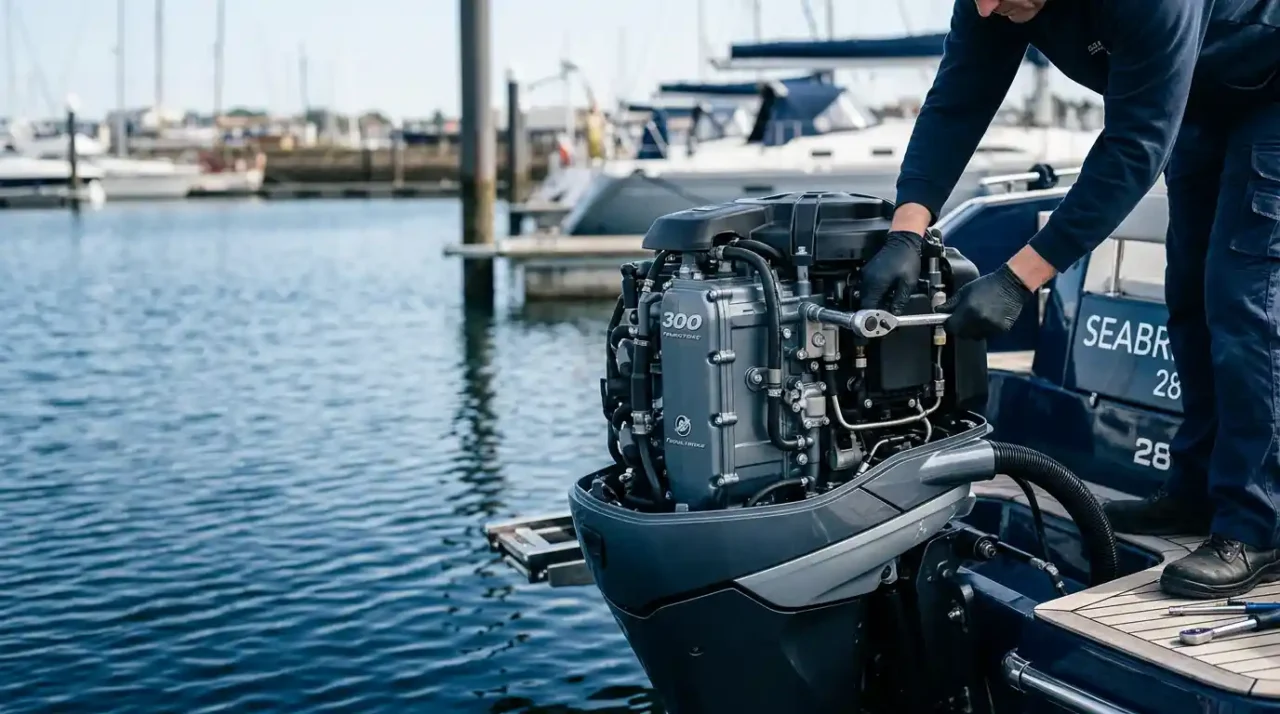
Picking the wrong engine can cost you thousands and years of frustration on the water. Choosing the right marine propulsion system comes down to matching three things: your boat type, how you use it, and your budget. An outboard motor suits light, fast boats. An inboard engine or sterndrive is best suited to heavier cruisers built for power and range. Electric and hybrid options work well for quiet, low-maintenance trips. The right propeller, horsepower, and fuel type then complete the setup. Get this match right, and your boat runs smoother, burns less fuel, and lasts longer, saving you money every season you’re out on the water.
What Is a Marine Propulsion System?
A marine propulsion system is the combination of engine, drivetrain, and propeller that moves your boat through water. It’s the single biggest factor in how your boat performs, how much fuel it burns, and how much you’ll spend on upkeep over its lifetime.
Every propulsion system converts engine power into thrust. But the path that power takes, through a shaft, a sterndrive, a jet pump, or an electric motor, changes everything about how the boat handles, how efficient it is, and where you can use it.
Choosing the right system isn’t just a mechanical decision. It’s a decision about your budget, your boating style, and how long you plan to own the boat.
Core Components (Engine, Drivetrain, Propeller)
Three parts work together in every propulsion system.
The engine generates power, measured in horsepower and torque. The drivetrain transfers that power from the engine to the water; this could be a direct shaft, a sterndrive unit, or a jet pump. The propeller (or impeller, in jet systems) converts rotational power into forward thrust.
Get one of these three wrong for your boat, and the whole system underperforms. A powerful engine paired with the wrong propeller pitch wastes fuel and loses top speed. A well-matched drivetrain on an underpowered engine leaves you struggling against current or wind.
Why Propulsion Choice Affects Performance and Cost
Your propulsion system determines three things you’ll live with for years: speed, fuel cost, and maintenance bills.
A diesel inboard costs more upfront but burns less fuel per mile and lasts longer under heavy use. An outboard motor costs less initially and is easier to service, but it may not withstand the demands of years of commercial use.
The right choice depends on how you actually use your boat, not on which system sounds the most powerful on paper.
Types of Marine Propulsion Systems
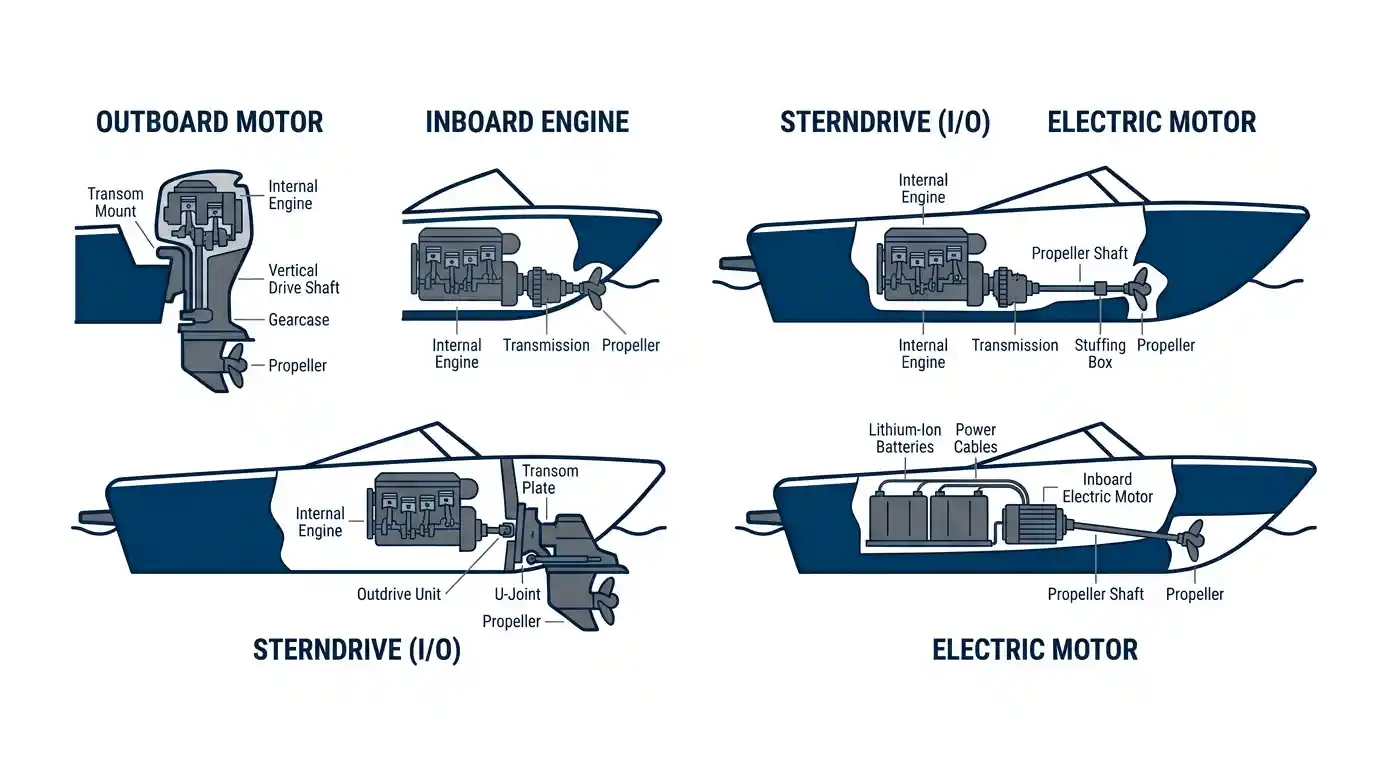
Not all boat engines work the same way. Each type of marine propulsion system moves your boat differently, and picking the right one changes how your boat feels on the water. Here’s a simple breakdown of the four main types.
Outboard Motors
An outboard motor sits outside the boat, mounted on the transom. It’s light, easy to service, and simple to replace. Most fishing boats and small recreational boats use outboards. They offer great fuel efficiency and strong horsepower options for their size.
Inboard Engines
An inboard engine sits inside the hull, connected to a propeller shaft. This setup gives you more torque and a smoother ride. Larger cruisers and commercial vessels often choose inboard engines because they handle heavy loads well and last longer under constant use.
Sterndrive (Inboard/Outboard) Systems
A sterndrive blends both worlds. The engine sits inside the boat, but the drive unit sits outside, like an outboard. This combo gives you inboard power with outboard steering control. It’s a popular choice for mid-size recreational boats.
Electric and Hybrid Propulsion
Electric motors run quietly and need less maintenance. No fuel system, no exhaust, no engine oil changes. Hybrid propulsion systems combine electric and diesel or gasoline power, giving you flexibility. These options suit boaters who want lower running costs and a smaller environmental footprint.
Key Factors to Consider Before Choosing
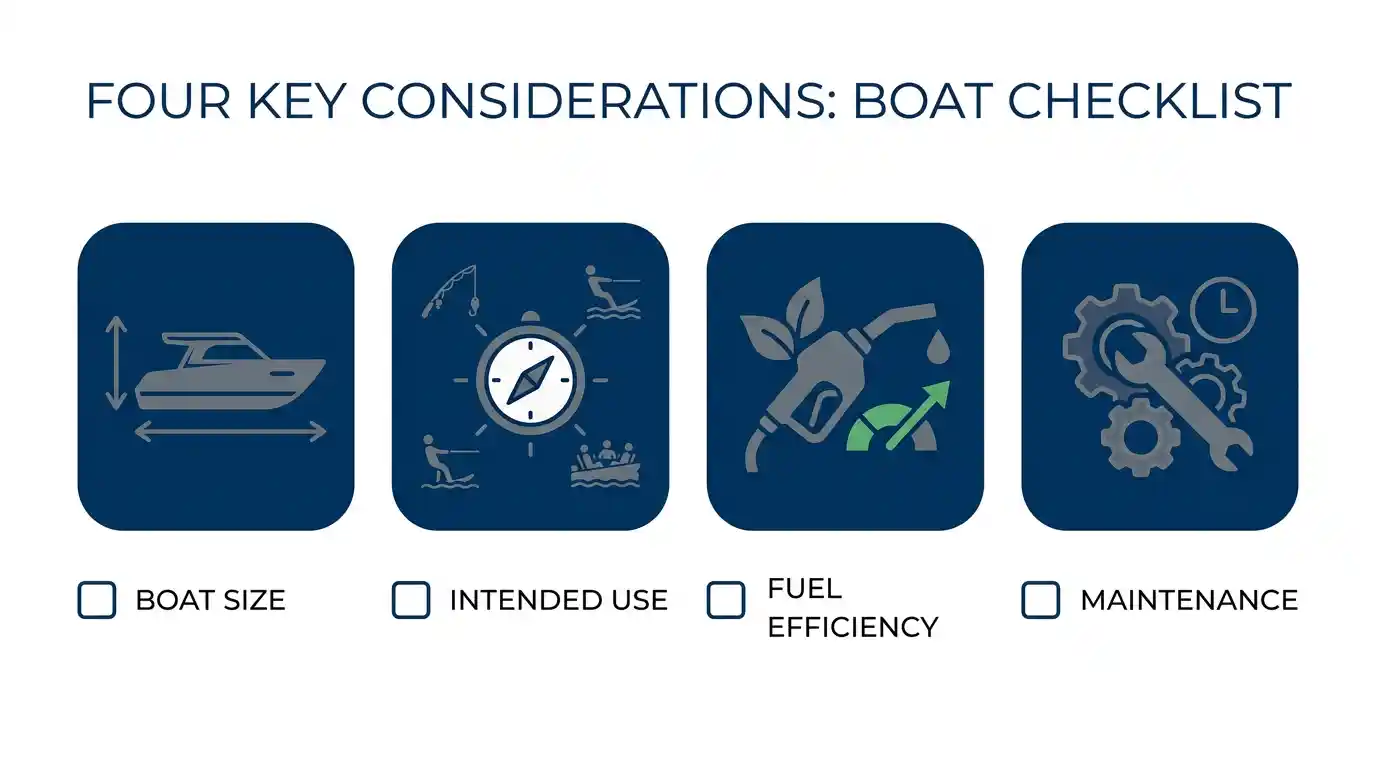
Picking a propulsion system isn’t just about horsepower. The right choice depends on your boat, how you use it, and what you’re willing to spend. Four factors matter most: size, use, fuel efficiency, and maintenance.
Boat Size and Weight
Bigger boats need more power. A heavy cruiser needs a stronger engine and a solid power-to-weight ratio to move well. A small boat with too much engine wastes fuel and feels hard to control. Match the engine size to your hull, not the other way around.
Intended Use (Fishing, Cruising, Racing, Commercial)
How you use your boat changes what you need. Fishing boats want reliable, fuel-efficient outboards. Cruisers want smooth, powerful inboard engines for long trips. Racing boats need speed and light weight. Commercial vessels need engines built for daily, heavy-duty work.
Fuel Efficiency and Operating Cost
Fuel efficiency affects your wallet every time you go out. Diesel engines burn less fuel per mile but cost more upfront. Gasoline engines cost less initially but burn fuel faster. Think about how often you’ll use the boat before deciding.
Maintenance Requirements
Every engine needs care, but not equally. Outboards are easy to service and repair. Inboard engines take more work but last longer. Electric motors need the least maintenance of all. Choose based on how much time and money you want to spend keeping your boat running.
Matching Propulsion to Your Boat Type
The best propulsion system depends on the boat itself. A small fishing boat and a commercial vessel need completely different setups. Here’s how to match power to purpose.
Small Boats and Personal Watercraft
Small boats and personal watercraft need light, simple systems. Outboard motors work best here. They’re easy to mount, easy to fix, and give you enough horsepower without adding extra weight. Most small-boat owners want something reliable that won’t slow them down or drain their bank account.
Mid-Size Recreational Boats
Mid-size boats need more balance between power and control. Sterndrive systems fit well here. They give you strong performance for cruising and watersports, plus better steering than a standard outboard. Many boat owners in this range also consider inboard engines for smoother rides at higher speeds.
Commercial and Heavy-Duty Vessels
Commercial vessels work hard every day, in tough conditions. Inboard diesel engines handle this best. They offer strong torque, better fuel efficiency over long hours, and a longer lifespan under constant use. These boats need propulsion built for reliability, not just speed.
Cost vs. Performance Tradeoffs
Every propulsion system asks you to trade something. More power often means more cost. More efficiency sometimes means less speed. Here’s how to weigh your options.
Upfront Cost vs. Long-Term Value
A cheaper engine saves you money today. But it might cost more over time. Diesel engines cost more upfront, but they last longer and burn less fuel. Gasoline engines cost less initially, but need more frequent maintenance. Think about how long you’ll own the boat before you decide.
Speed and Power Considerations
More horsepower means more speed. But it also means more fuel burned per trip. A high-powered engine feels great on the water, but it costs more to run. Match your power needs to how you actually boat, not to what sounds impressive on paper.
Resale Value Impact
Your propulsion system affects resale value too. Boats with well-maintained, reliable engines sell faster and for more money. Diesel inboards and trusted outboard brands tend to hold value better. A poorly maintained or unusual setup can scare off future buyers, even if the boat looks great.
Common Mistakes to Avoid When Selecting a Propulsion System
Even experienced boaters make mistakes when choosing a propulsion system. These errors cost money, hurt performance, and shorten your engine’s life. Here are the three biggest ones to avoid.
Underpowering or Overpowering Your Boat
Too little power strains your engine and wastes fuel. Too much power adds unnecessary weight and cost. Both choices hurt your power-to-weight ratio and your boat’s handling. Always match engine size to your hull, not to what seems impressive.
Ignoring Maintenance Access
Some engine setups are hard to reach for repairs. If you can’t easily check the oil, cooling system, or gearbox, small problems turn into expensive ones. Before buying, think about how easy the engine is to service, not just how it performs on day one.
Overlooking Fuel Type Availability
Diesel isn’t sold everywhere, and neither is every marine-grade gasoline blend. Choosing an engine without checking fuel availability in your boating area can leave you stranded or paying more for fuel delivery. Always confirm your fuel type is easy to find where you’ll actually be boating.
FAQs
Quick answers to the questions boaters ask most before choosing a propulsion system.
How do I know what size engine my boat needs?
Check your boat’s recommended horsepower rating, usually listed on a capacity plate near the helm or transom. This rating accounts for your hull size, weight, and safe handling limits. Going above it hurts control. Going below it strains the engine and wastes fuel.
What’s the difference between inboard and outboard propulsion?
An outboard motor mounts outside the boat and is easy to service. An inboard engine sits inside the hull and drives a propeller shaft, providing smoother power and better handling for larger boats. Outboards suit smaller boats. Inboards suit bigger, heavier vessels.
Is electric propulsion worth it for recreational boats?
Yes, if you value quiet rides and low maintenance over long range. Electric motors need less upkeep and produce no exhaust. But they currently offer shorter range than gas or diesel engines, so they work best for short trips, small lakes, or calm-water cruising.
How often should I service my marine propulsion system?
Most manufacturers recommend a full engine service once a year, or every 100 hours of use, whichever comes first. Check oil, filters, the cooling system, and propeller condition regularly. Saltwater engines need more frequent checks than freshwater ones.
Thank you for reading!