

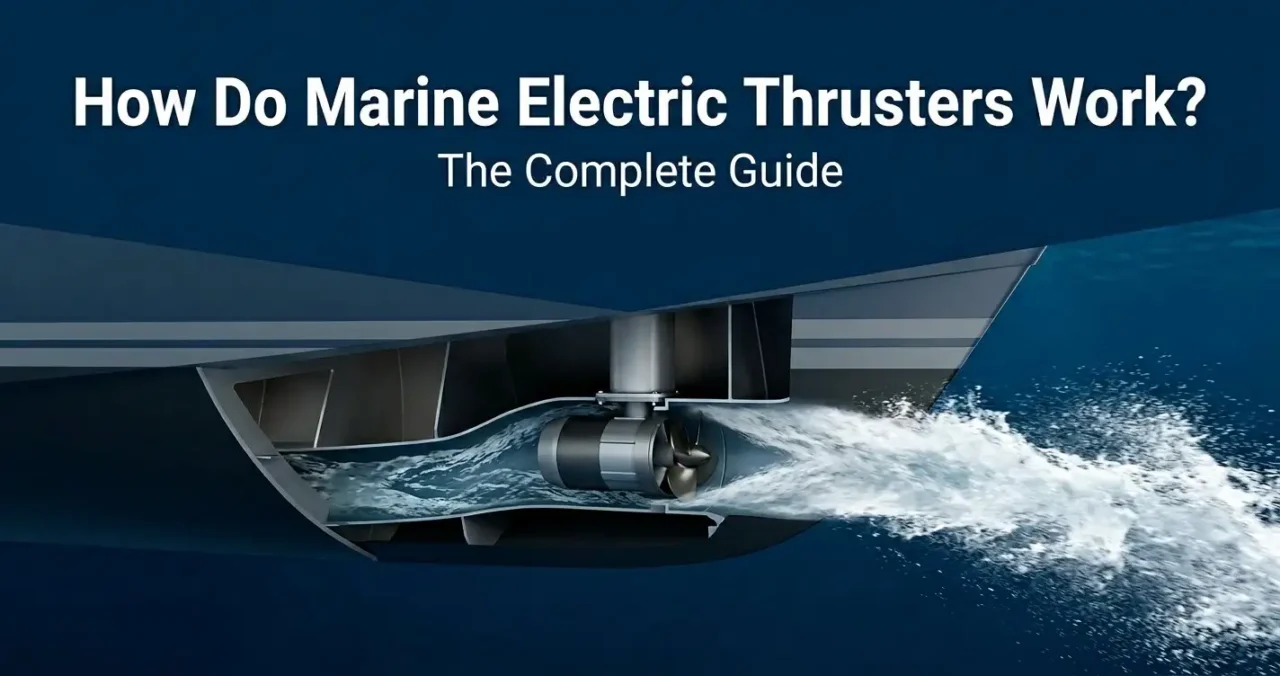
How do marine electric thrusters work? They use a small electric motor to spin a propeller inside a tunnel, pushing water sideways to move your bow or stern left or right. No extra steering skill needed; just push a button, and the boat responds.
Docking used to mean sweaty palms and a dock full of onlookers. One gust of wind and your bow swings the wrong way. That’s where a bow thruster changes everything. Paired with a solid battery bank and a simple joystick control, this small piece of marine tech gives any boater the kind of close-quarters handling that used to take years to master.
What Is a Marine Electric Thruster?
A marine electric thruster is a small propulsion unit mounted inside a tunnel that runs through the bow or stern of a boat. It uses an electric motor to spin a propeller, pushing water sideways to move the boat left or right without touching the main engine or helm.
Think of it as a sideways engine built for one job: precision. Instead of relying on rudder angle and forward momentum, a thruster gives you direct sideways control, even when the boat is sitting still in the water.
This matters most in close-quarters situations. Docking in a tight marina slip, holding position against a crosswind, or maneuvering near other vessels all become easier with a thruster doing the fine work your main engine can’t.
Bow Thrusters vs. Stern Thrusters
A bow thruster sits at the front of the boat. It’s the most common type, since most boats need help controlling the bow, which tends to swing wide during low-speed turns.
A stern thruster sits at the back. Boats with both bow and stern thrusters gain full sideways control, allowing the operator to shift the entire boat left or right without any forward motion. This setup is common on larger yachts and boats that dock stern-first.
If you can only install one, the bow thruster usually delivers the biggest handling improvement, since bow swing is the harder problem to manage manually.
Electric vs. Hydraulic Thrusters
Electric thrusters run on your boat’s battery bank and a DC motor. They’re simpler to install, cost less upfront, and work well on boats under roughly 60 feet.
Hydraulic thrusters run off a separate hydraulic pump system, usually powered by the main engine. They deliver more continuous thrust and handle heavier boats better, but they cost more and need more complex installation.
For most recreational boat owners, electric thrusters hit the sweet spot: strong enough performance, lower cost, and far less maintenance than a hydraulic setup.
How Do Marine Electric Thrusters Work?
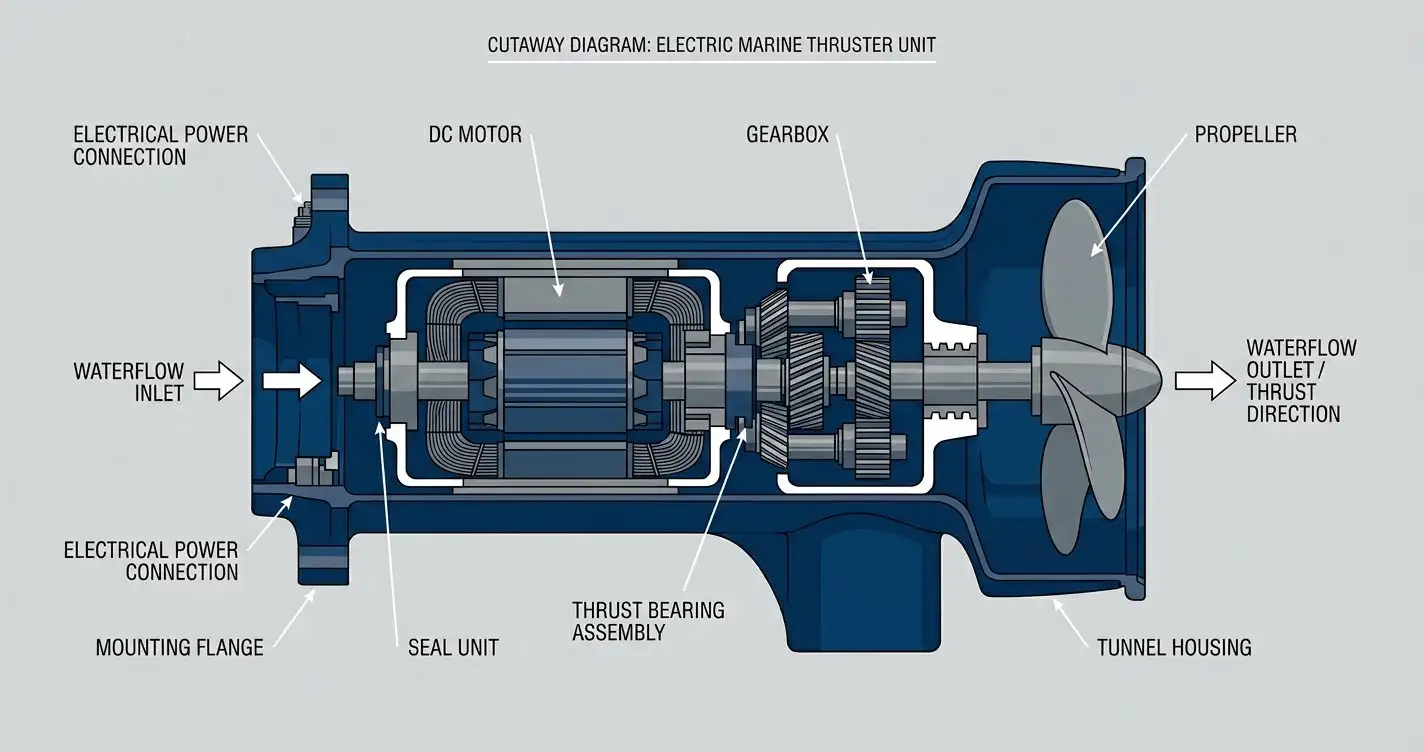
Want the quick answer? A thruster spins a propeller sideways inside a tunnel. That push moves your bow or stern exactly where you want it, no extra steering. No guesswork.
Here’s how each part plays its role.
The Motor and Propeller Mechanism
At the heart of every thruster sits a DC motor. It spins fast and delivers torque output the moment you press the button.
That motor turns a small propeller with a specific propeller pitch, built for quick bursts of power, not long runs. The propeller sits inside a tunnel housing that cuts straight through the hull. Water flows in one side and shoots out the other. That flow creates thrust force, measured in pounds or kgf, strong enough to swing even a heavy boat sideways.
Role of the Battery and Power System
Every thruster needs power, and that power comes from your battery bank. Most systems run on 12V or 24V, though larger boats sometimes use 48V setups for extra thrust force.
Thrusters draw a lot of amperage in short bursts. That’s why wiring gauge matters so much. Thin wires overheat. Thick wires handle the amp draw safely. A solid circuit breaker protects the whole system if something goes wrong.
Control Panel and Joystick Operation
This is the part boaters love most. A simple control panel or joystick control puts the thruster right at your fingertips.
Push left, the bow moves left. Push right, it moves right. Many modern systems now offer proportional control, meaning that gentle pressure yields gentle thrust, while a firm push delivers full power. Some boats even integrate the thruster with autopilot for hands-free docking assistance.
Key Components of an Electric Thruster System
What makes a thruster actually work? Three main parts. The motor, the tunnel, and the wiring. Each one plays a specific role, and each one matters just as much as the others.
Let’s break them down.
Motor and Gearbox
The motor is the engine of the whole system. It spins fast, but on its own, that speed isn’t useful.
That’s where the gearbox comes in. It takes the motor’s spin and converts it into strong torque output, the kind of power needed to push a heavy boat sideways. The gearbox ratio decides how much of that raw speed turns into usable thrust. A well-matched gearbox means smoother performance and a longer motor lifespan.
Tunnel and Propeller Design
The tunnel is the pathway. It’s a hollow tube built into the hull, allowing water to flow freely from one side to the other.
Inside that tunnel sits the propeller. Its blade design and propeller pitch decide how much water it can push, and how fast. A well-designed prop blade moves more water with less strain on the motor. Poor tunnel placement, though, can reduce vessel stability and weaken overall thrust force.
Wiring and Battery Requirements
Power has to travel from the battery bank to the motor, and that journey depends entirely on wiring gauge.
Thick, properly rated wiring handles high amp draw without overheating. A dedicated circuit breaker adds a layer of safety. And your battery bank, whether lithium or AGM, needs enough amp-hours to handle short, powerful bursts every time you dock.
Get these three components right, and your thruster will perform reliably for years.
Benefits of Using Electric Thrusters on Your Boat
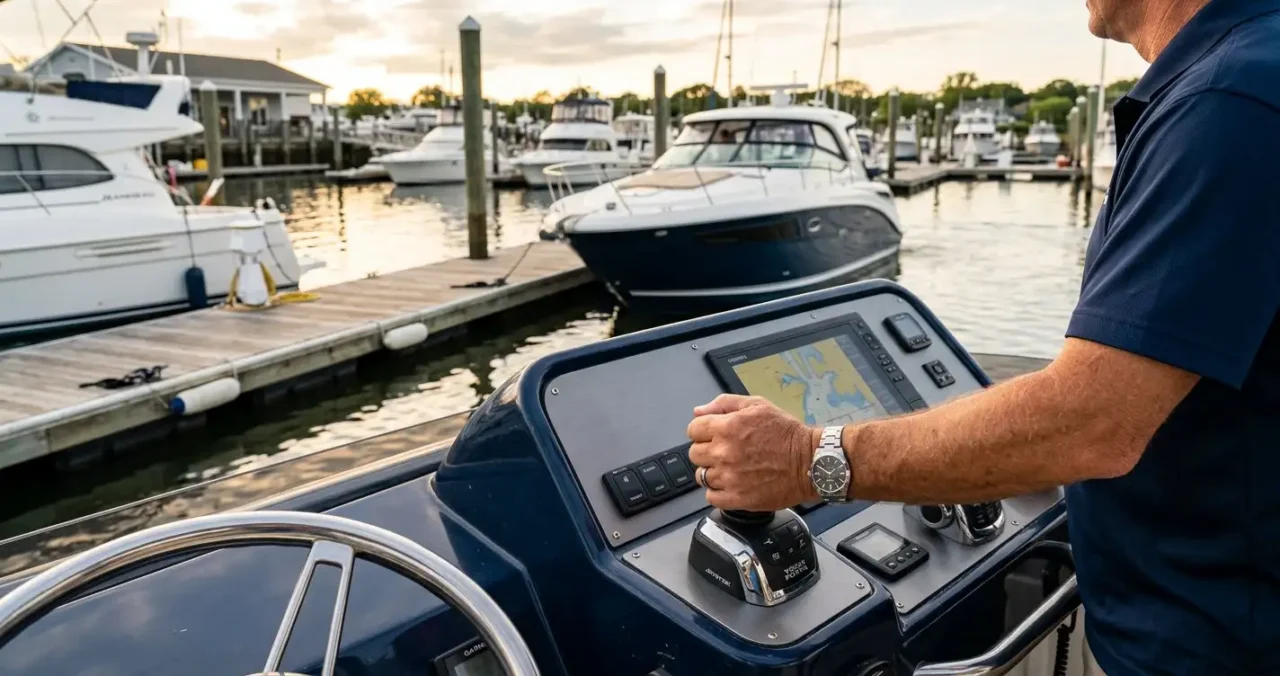
Why do so many boaters upgrade to a thruster? Simple. It makes boating easier, safer, and a lot less stressful. Let’s look at the biggest wins.
Improved Docking Control
This is the number one reason boaters install a thruster. Docking gets easier, fast.
With a bow thruster, you control bow swing without touching the throttle. Crosswind days stop being scary. You just nudge the joystick control and hold your line straight into the slip. Pair that with proportional control, and even tight marina spots become manageable, even for beginners.
Boats with both a bow and stern thruster get full sideways movement. That means you can slide into a slip sideways, no forward motion needed at all. It’s the kind of docking assist that turns a stressful moment into a calm one.
Low Maintenance Compared to Hydraulic Systems
Electric thrusters are simple machines. Fewer moving parts means fewer things that can break.
There’s no hydraulic pump to service, no hydraulic fluid to check, and no hoses that can leak over time. Your main jobs are checking the battery bank, keeping connections clean, and making sure the circuit breaker is working properly.
Hydraulic thruster systems need more attention. They rely on the main engine, added pumps, and pressurized lines, all of which add extra maintenance points. Electric systems skip most of that complexity.
For most recreational boat owners, that difference adds up to real savings in both time and repair costs.
How to Choose the Right Thruster for Your Boat
Not every thruster fits every boat. Pick the wrong one, and you’ll either overpay or underperform. Here’s how to get it right.
Matching Thruster Power to Boat Size
The short answer? Bigger boats need more thrust force. Smaller boats don’t.
Boat length and beam both play a role here. A 25-foot boat might only need a small thruster with modest torque output. A 50-foot yacht needs something far stronger to move that extra weight.
Most manufacturers publish a thruster sizing chart based on displacement, not just length. A heavy, wide-beam boat needs more power than a light boat of the same size. Always check displacement first, then match it to a thruster rated for that weight class.
Windage matters too. Boats with tall cabins or lots of surface area above the waterline catch more wind. That means you’ll want extra thrust force to fight crosswind push during docking.
Budget vs. Performance Considerations
Thrusters range widely in price, and the difference usually comes down to power, build quality, and features.
A basic fixed-pitch tunnel thruster is less expensive and works well for smaller boats. A retractable thruster costs more but reduces drag when not in use, a nice option for sailboats focused on performance.
Higher-end systems often include proportional control and autopilot integration, both of which improve docking assistance but increase the price. Battery upgrades, such as switching to a lithium battery, also increase costs but improve amp-hour capacity and charging speed.
Set a budget first. Then work backward, choosing the strongest thruster your budget allows without skipping build quality.
Installation and Maintenance Tips
A thruster is only as good as its installation. Get this part right, and it’ll serve you for years with minimal fuss.
DIY vs. Professional Installation
Can you install a thruster yourself? Sometimes, yes. It depends on your boat and your comfort level with tools.
Smaller boats with simple access to the hull make DIY installation possible for handy owners. You’ll need to cut the tunnel housing, mount the motor, run wiring gauge-appropriate cable, and connect everything to the battery bank and circuit breaker.
Larger boats, or boats with fiberglass hulls needing precise tunnel placement, are better left to professionals. A poorly placed tunnel can hurt vessel stability and reduce thrust force. Wiring mistakes can also damage the motor or drain the battery bank faster than expected. When in doubt, a marine technician saves you from costly rework down the line.
Common Maintenance Mistakes to Avoid
Even a well-installed thruster needs basic care. Skip it, and performance drops fast.
The biggest mistake? Ignoring the battery bank. Low amp hours or a weak lithium battery or AGM battery means weaker thrust force right when you need it most, like docking in a crosswind.
Second mistake: corroded connections. Saltwater boats especially need regular checks on wiring and the circuit breaker. Corrosion gradually increases resistance, reducing power and potentially causing components to overheat.
Third mistake: ignoring the propeller. A damaged prop blade or bent propeller pitch throws off balance, straining the gearbox and motor over time.
Check these three things every season- battery, wiring, and propeller- and your thruster stays reliable for years.
Conclusion
Marine electric thrusters take the stress out of docking. A small motor, a spinning propeller, and a simple joystick control work together to give you full command over bow swing and crosswind push. Whether you’re battling a tight marina slip or holding position near other boats, this small upgrade delivers big confidence at the helm. Choose the right size for your boat, keep your battery bank and wiring in good shape, and your thruster will reward you with smooth, stress-free docking for years to come.
FAQ
Do electric thrusters drain the battery fast?
No, not under normal use. Thrusters draw power only in short bursts, usually for a few seconds at a time. A healthy battery bank with enough amp-hours easily handles daily docking without draining quickly.
How much thrust force do I need for my boat?
It depends on your boat length, beam, and displacement. Most manufacturers offer a thruster sizing chart to match thrust force to your boat’s weight class. Heavier or wider boats need more power.
Can I install a bow thruster myself?
Smaller boats with easy access to the hull often allow DIY installation. A professional is best suited to handling larger boats or complex hulls to avoid wiring mistakes or poor tunnel placement.
What’s the difference between a bow thruster and a stern thruster?
A bow thruster controls the front of the boat, while a stern thruster controls the back. Boats with both get full sideways movement for effortless docking.
How often should I maintain my electric thruster?
Check your battery bank, wiring, and propeller each season. Look for corrosion, loose connections, or a bent propeller pitch. Regular checks keep thrust force strong and reliable.
Are electric thrusters better than hydraulic ones?
For most recreational boats, yes. Electric thrusters cost less, are easier to install, and require far less maintenance than hydraulic thruster systems, which rely on pumps and pressurized lines.
Thank you for reading!